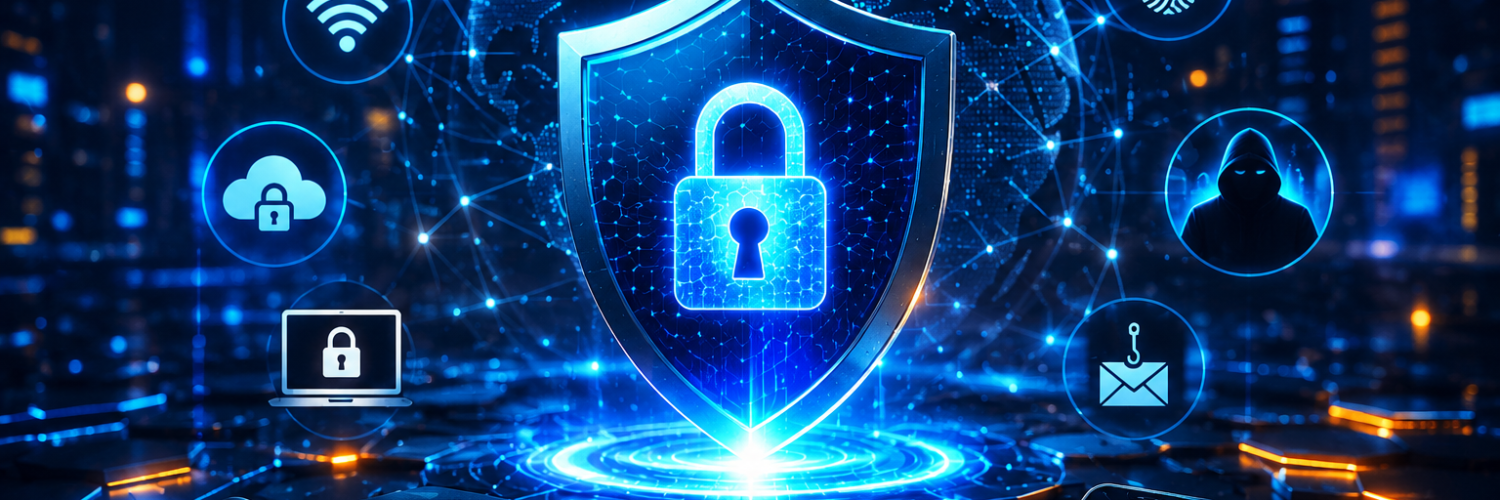
In 2026, cybersecurity is no longer just an IT issue — it is a critical business necessity. As technology continues to evolve, small businesses, nonprofits, and organizations of all sizes are becoming increasingly dependent on digital systems, cloud storage, online banking, e-commerce, artificial intelligence, and remote collaboration tools. While these technologies create opportunities for growth and efficiency, they also create new risks that can threaten an organization’s operations, finances, and reputation.
Cybercriminals are becoming more advanced every year. Modern cyberattacks are no longer limited to large corporations. In fact, small businesses are now one of the most common targets because attackers often assume they have weaker security systems and fewer protections in place. A single phishing email, weak password, or compromised device can lead to stolen customer data, financial loss, identity theft, ransomware attacks, or even complete business disruption.
One of the biggest cybersecurity threats in 2026 is phishing and social engineering. Attackers are now using artificial intelligence to create highly convincing emails, text messages, and fake websites designed to trick individuals into revealing passwords or sensitive information. These scams can appear to come from trusted organizations, coworkers, banks, or even business partners. This makes employee awareness and cybersecurity training more important than ever before.
Ransomware attacks also continue to rise. In these attacks, hackers lock organizations out of their own systems and demand payment to restore access. For small businesses, even a short disruption can lead to lost revenue, damaged customer trust, and operational chaos. Organizations without secure backups or cybersecurity protocols are especially vulnerable.
Strong cybersecurity practices help protect not only data, but also customer confidence and long-term business sustainability. Businesses that prioritize cybersecurity demonstrate professionalism, responsibility, and commitment to protecting the people they serve. In today’s digital economy, customers expect organizations to safeguard their personal and financial information.
There are several important steps organizations should take to strengthen cybersecurity in 2026:
- Use strong, unique passwords and multi-factor authentication (MFA)
- Keep computers, software, and devices updated regularly
- Train employees to recognize phishing scams and suspicious activity
- Store important files securely using trusted cloud platforms
- Back up critical data frequently
- Use antivirus and endpoint protection software
- Limit access to sensitive information only to authorized users
- Develop a cybersecurity response plan for emergencies
Cybersecurity is not a one-time project — it is an ongoing commitment. As technology changes, businesses must continuously adapt and remain proactive against evolving threats. Investing in cybersecurity today can prevent devastating consequences tomorrow.
At the end of the day, cybersecurity is about more than protecting computers. It is about protecting businesses, employees, customers, and communities in an increasingly connected world. Organizations that embrace cybersecurity best practices in 2026 will be better positioned to innovate, grow, and succeed safely in the digital age.
